Firstly, I completely agree that if food prices are lower then more people will be able to afford food. I do not refute this robust finding at all. I was given data on donations to food banks and found that overall, lower priced retailers (such as Aldi and Wal-Mart) would donate greater volume over the course over the year. However, when higher priced retailers (Publix or Wegmans) donate they give a greater volume of donation than a lower priced retailer. For example, if Wal-Mart gives a donation at 10am on Monday and Wegmans gives a donation at 10am on Monday then it’s likely that Wegmans will have given more. I also found that higher priced retailers would give a greater value of goods per donation (e.g. more higher priced goods). So, can higher prices help, partly yes because higher priced retailers are more likely to give greater volume of food to food banks (per donation).
Also, if you are curious. The lowest priced retailer in our sample was BJ’s Wholesale Market while the highest priced retailer was Publix (Wal-mart was the 6th cheapest out of 11 retailers). The greatest volume of donations came from Wal-Mart.
In a recent development over the power of everyday AI, researchers have found that it can be used to predict stock prices more accurately than conventional algorithms. The researchers entered headlines into ChatGPT along with other variables and the AI software conducted a sentiment analysis to determine whether the stock was heading up or down. Sentiment analysis is the process of determining the emotional tone of the text. If anything, this this a pretty cool development because it shows how AI can be used to interpret something subjective and then quantify it so that it can be used to predict. Imagine if we could predict whether someone will like something based on their mood before they even tried it? Or if someone would have paid more based on the review they gave? There’s no doubt that AI is here to stay, the challenge is how we can harness its power.
I was given early access to Google Bard (Google’s AI enabled search bot) so I tested it out to compare who would give the better answer on an exam question. The question was from a Principles of Marketing Course I taught a couple of years ago. Overall, Google Bard received full marks while Chat GPT received a 4/5. You can check out the experiment here: https://www.youtube.com/watch?v=Bn9dLSpwKj4
We recently presented the results of a series of studies we’ve been conducting on how decision making changes when you have your phone vs. when you don’t have your phone. The studies were conducted on campus and at local retailers. We found the following: when people don’t have their phone they take less risks, are less critical, and take more time shopping. What does this mean if you’re a consumer? Don’t shop with your phones! If you’re a business, encourage people to use their phones. The presentation at the AMA Winter Conference can be found here. A boon for retail but a drawback for taste_final
We are currently undergoing a study of food waste on the campus of the University of Mary Washington. Our ultimate goal is to reduce food waste on campus and beyond. Food waste leads to food insecurity, damages the environment, and increases costs. Before we can take action to reduce food waste we need to measure the size of the problem on campus. Once we have data on the problem we can test what can be done to reduce it. Students in MKTG 417J (alleviating food waste) are in the UC collecting uneaten foods on plates to measure waste on aggregate each day. We are processing all food waste into a bucket and then weighing the entirety of what is collected in that bucket. Results of this study will then be used to inform policies directed at reducing food waste. For questions or concerns please reach out to me (Kashef Majid): kmajid@umw.edu.
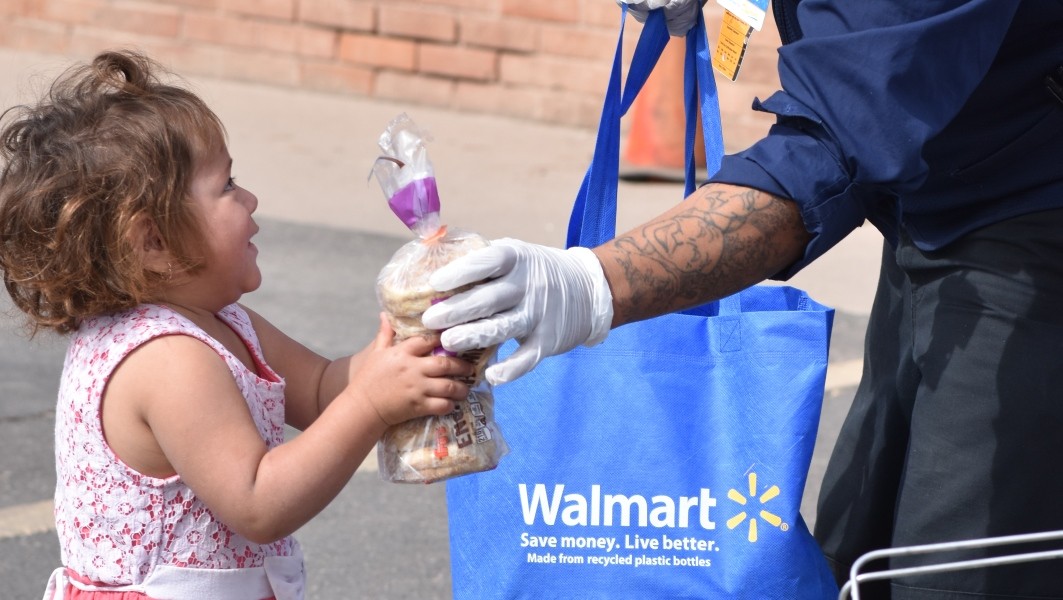
 Firstly, I completely agree that if food prices are lower then more people will be able to afford food. I do not refute this robust finding at all. I was given data on donations to food banks and found that overall, lower priced retailers (such as Aldi and Wal-Mart) would donate greater volume over the course over the year. However, when higher priced retailers (Publix or Wegmans) donate they give a greater volume of donation than a lower priced retailer. For example, if Wal-Mart gives a donation at 10am on Monday and Wegmans gives a donation at 10am on Monday then it’s likely that Wegmans will have given more. I also found that higher priced retailers would give a greater value of goods per donation (e.g. more higher priced goods). So, can higher prices help, partly yes because higher priced retailers are more likely to give greater volume of food to food banks (per donation).